Madikok Neurosurgery Clinic Doctor's Column
Neurosurgery & Orthopedics Column

Manual Therapy Not Working After Many Sessions: What Was Missed?

The standards to check when manual therapy has no effect: the diagnosis, the adjustment made at each visit, and the treatments combined with it.

Published 2026-10-28 Updated 2026-10-28 Reviewed by Gyochang Song, Medical Director · Neurosurgery Specialist

If close to ten rounds of manual therapy have left the pain no different from the start, reviewing the treatment method itself comes before adding more sessions. In most cases the reason it has not worked is not that the body is unsuited to this approach, but that one of three conditions was missing: diagnosis of the cause, adjustment on the day, and combined treatment.

If the pain is unchanged even after all 10 sessions, the first step is to look back at what was actually done during those 10 sessions. This article covers the conditions that decide the effect of manual therapy, along with the standards for choosing a place that can be trusted.

01

Was the cause of the pain found accurately?

Key point
The first condition of manual therapy is finding the point where the pain began, not simply the spot that hurts. Even after all 10 sessions are completed, if this diagnosis is missing, the pain tends to return to where it was within a few days of treatment.

Manual therapy is a method in which a therapist works on the joints and muscles by hand, but the key is not the fact that hands are used. It lies in what those hands are guided by. Repeatedly pressing only the painful area without a clear basis rarely produces more than momentary relief, and the effect lasts only when the process restores alignment on the basis of a medical diagnosis.

The body is connected as a single axis from the head down to the pelvis, so problems in the neck, the back and the pelvis affect one another in sequence. It is not unusual for shoulder pain to have its cause in the neck, or for lower back pain to start from the pelvis. When loosening the painful spot brings relief only for that moment, it is because the starting point was not addressed.

  • Forward head posture and straight neck — when the head stays pushed forward for a long time, this becomes the point where the back begins to round
  • Rounded back — acts as the middle link that passes the strain starting in the neck down to the pelvis
  • Pelvic misalignment — the place where misalignment carried down from the neck and back finally arrives and shows up as pain
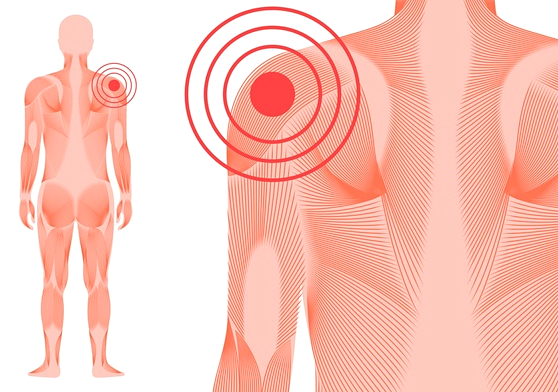
Anatomy illustration related to Manual Therapy Not Working After Many Sessions: What Was Missed?
02

Was treatment adjusted to the condition that day, and were other treatments combined?

Key point
A patient's physical condition is not the same at every visit, so repeating exactly the same method as last time means no adjustment was made. When inflammation or nerve irritation is involved as well, medication or exercise has to be combined with the hands-on treatment rather than left out.

Last time it may have hurt to bend forward at the waist, while today the pain may be less. The opposite can also happen, with a discomfort that was not there before appearing in a particular movement. The state of the muscles differs between a day after poor sleep and a day after proper rest, so the pain and movement need to be checked again at every visit and the intensity and area adjusted accordingly.

If the cause of the pain is tangled up with inflammation, nerve irritation or even muscle weakness, trying to improve it through hands-on release alone is unlikely to be the answer. Depending on the condition, pain sometimes has to be controlled first with medication or injection, and in other cases exercise has to be combined to correct weakened muscles.

Research material related to Manual Therapy Not Working After Many Sessions: What Was Missed?
Related research
03

What are the standards for choosing a place that can be trusted?

Key point
Price is a poor standard, because even for the same 1 session, what actually happens within it differs from place to place. It is more useful to look at how closely the body is examined at the first visit and whether the care continues through to a recovery plan.

If a patient is laid on the treatment table straight away without proper examination and assessment, treatment begins without the cause being known. From the first visit, posture analysis and physical examination should establish where the problem lies, and the intensity and goals should be set while the response on the day is checked in real time.

In a study that divided patients with chronic lower back pain into three groups and compared them over 12 weeks, among the group that did exercise alone, the group that added taping and the group that added hands-on treatment, the group that exercised after manual therapy showed the largest improvement on every measure. The result changes depending on how the order of recovery is designed.

  • Which movement brings out the problem — identifying the motion that triggers pain narrows down the area responsible
  • Which area to approach first — the standard for deciding what has to be dealt with first among several problems
  • Movements to avoid — identifying in advance the motions that could make the condition worse
  • Setting intensity and goals — deciding the treatment intensity and direction afresh according to the response on the day

Gyochang Song, Medical Director
Doctor's view

How the doctor decides

Gyochang Song, Medical Director · Neurosurgery Specialist

I look at the conditions before the number of sessions

I first check which condition has been missing so far, rather than how many more sessions a patient should have. When I hear that the pain is unchanged even after all 10 sessions, I go back over the diagnosis before adding more and check together with the patient where the pain started.

I do not proceed the same way every time

I do not simply repeat the method used at the previous visit. I check the pain and movement again that day and then adjust the intensity and the area. Because the body is different each time, I do not hold on to the plan set at the start, and I try to judge again from the response that appears that day.

I do not stop at hands-on release alone

When I judge that inflammation or nerve irritation is also present, I plan medication, injection or exercise therapy alongside. I do not try to solve everything with hands-on treatment by itself, and I try to design the whole process through to recovery together.

I do not make firm promises

I do not tell patients that they will be well after a certain number of sessions or that they will definitely improve. I believe it is more accurate to check the condition of the body and then explain, each time, what is needed at that point.

Summary

In summary

Manual therapy is a treatment done by hand, but it leads to results only when diagnosis of the cause, adjustment on the day and combined treatment are all part of it. If nothing has changed after many sessions, looking back at which of these three was missing comes before counting sessions. If pain keeps returning or a new discomfort appears, it is advisable not to leave it as it is and to have the cause checked again through a consultation.

FAQ

Frequently asked questions

QHow many sessions of manual therapy does it take to feel an effect?
A

It is difficult to answer with a number alone. What matters more is whether the cause was diagnosed and the treatment adjusted to the condition on the day. If there is no change even after 10 sessions, the possibility that a condition was missing should be looked at first.

QIs manual therapy alone enough, or are other treatments needed?
A

If the cause of the pain is tangled up with inflammation, nerve irritation or muscle weakness, medication, injection or exercise therapy often has to be combined. In a study carried out over 12 weeks, the group that combined exercise after manual therapy also showed the largest improvement.

QPrices are similar, so what should I look at when choosing a clinic?
A

Price is a poor standard, because even for the same 1 session, the examination and adjustment that take place within it differ. It is advisable to check how closely the body is examined at the first visit and whether the care continues through to a recovery plan.

Gyochang Song, Medical Director
Medical review
Gyochang Song, Medical Director · Neurosurgery Specialist
This content is general medical information and may not apply to every individual. Diagnosis and treatment are decided through a consultation.