It is not uncommon for someone with a pulling, numb leg to assume the knee is the problem and then be diagnosed with a herniated lumbar disc. The mistaken belief that a herniated disc causes pain only in the back makes it hard to recognise in the early stage. To state the conclusion first, the nerves compressed in the lower back continue down into the leg, so the leg can be numb even when the back feels fine, and the earlier the diagnosis, the better the outlook. This article sets out the mechanism and the right time to be examined so that it can be read in about 5 minutes.
Why does a herniated lumbar disc cause leg numbness?
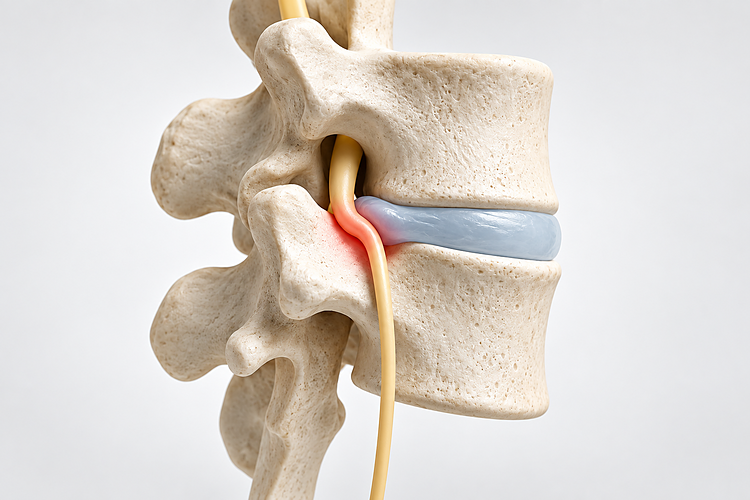
Between the vertebrae lies the intervertebral disc, a soft tissue that acts as a cushion, and a herniated lumbar disc is the state in which this disc has been pushed out for various reasons and presses on a nearby nerve. Most of the nerves compressed in the lower back continue into the leg, so even when the back feels fine, numbness, pulling or aching can develop in the buttock, thigh, calf or foot depending on where the pressure is.
Lumbar disc herniation commonly occurs in the lower part of the lumbar spine, at L4-L5 or L5-S1. These levels carry a heavy load, move a great deal and are vulnerable to degenerative change, so the disc is more likely to be pushed out there, which is also why some people who come in for leg pain hear an unexpected diagnosis of a herniated lumbar disc.
Can the numb area suggest which nerve is compressed?
In a herniated lumbar disc, the place where numbness appears, whether the front of the thigh, the outer calf and top of the foot, or the sole and little toe, indicates the level of the compressed nerve. Because the symptoms a patient feels can suggest which nerve is under pressure, remembering the numb area and the direction in which the sensation travels is helpful during the examination.
Leg numbness can also come from muscle fatigue or reduced circulation, but numbness that does not settle with rest and shoots sharply from the buttock down to the calf and foot calls for nerve compression in the lower back to be checked as well. Pain that comes from muscle is often stiff and heavy and stays in one place, so the direction of travel and the change with rest are the clues that separate the two causes.
- L4 nerve compression — numbness at the front of the thigh and above the knee is the typical symptom
- L5 nerve compression — numbness along the outer thigh and calf and the top of the foot is the typical symptom
- S1 nerve compression — numbness at the back of the calf, the sole and the little toe is the typical symptom
When should leg numbness be examined?
Leg numbness from a herniated lumbar disc may seem likely to pass if it is endured, but when the disc keeps pressing on the nerve, nerve damage progresses, sensation becomes dull, and in a severely ruptured disc even paralysis can develop. Once symptoms reach that stage the likelihood of surgery also rises, so starting diagnosis and treatment while symptoms are still relatively early is more favourable for the outlook.
Loss of strength in the leg has to be considered separately from numbness. Numbness can arise at the stage when a nerve is merely irritated, but reduced muscle strength means that nerve function itself is being affected, so difficulty standing on the heels, toes dragging on the floor, or a change in bladder or bowel control should be checked without delay.
- Back pain lasting 2 weeks or more — a signal to seek a diagnosis instead of waiting for it to settle by itself
- Leg numbness or altered sensation — suggests that a nerve leading to the leg may be compressed in the lower back
- Radiating pain from the back through the buttock to the leg — a typical symptom when a disc presses on a nerve